Free Math Worksheets for Beginners
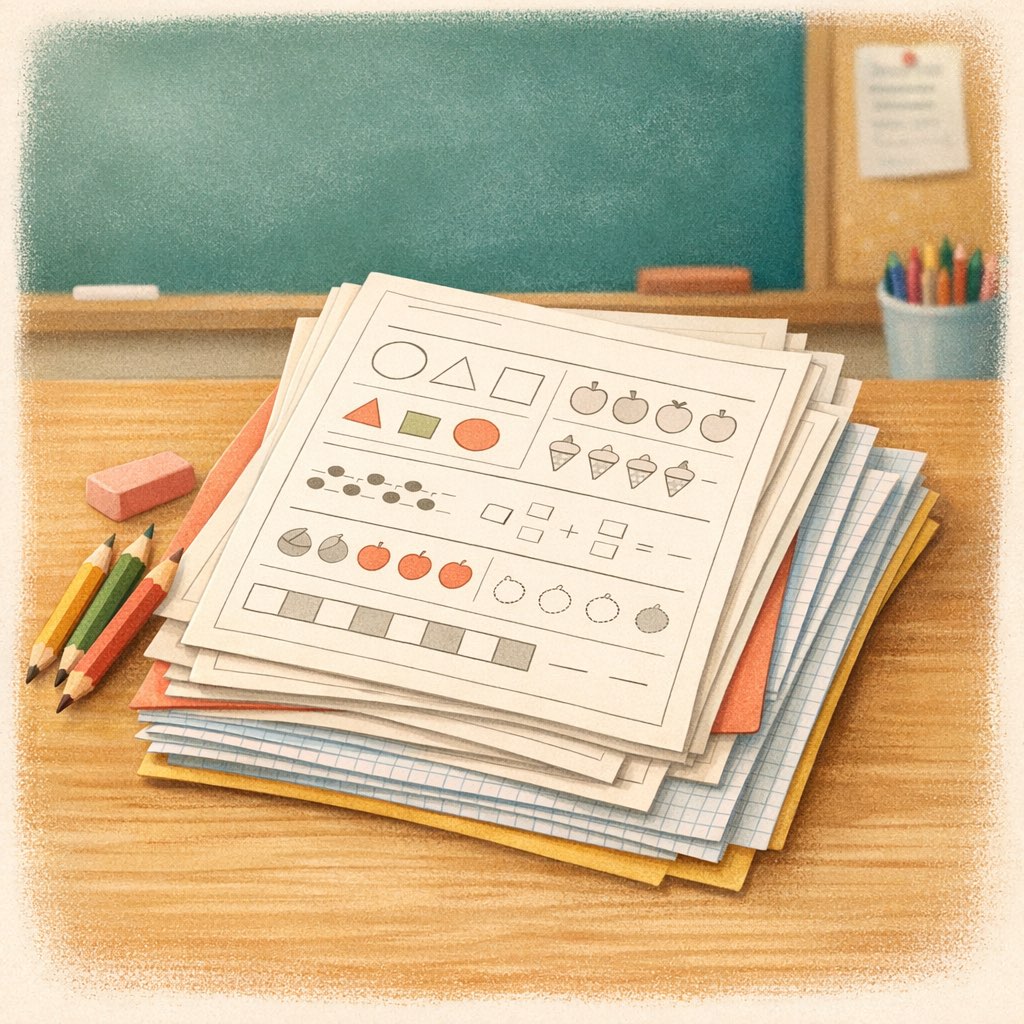
A beginner-friendly collection of worksheet ideas focused on steady practice rather than overload.
Worksheets
A mixed set of questions that helps students check understanding across several common topics.
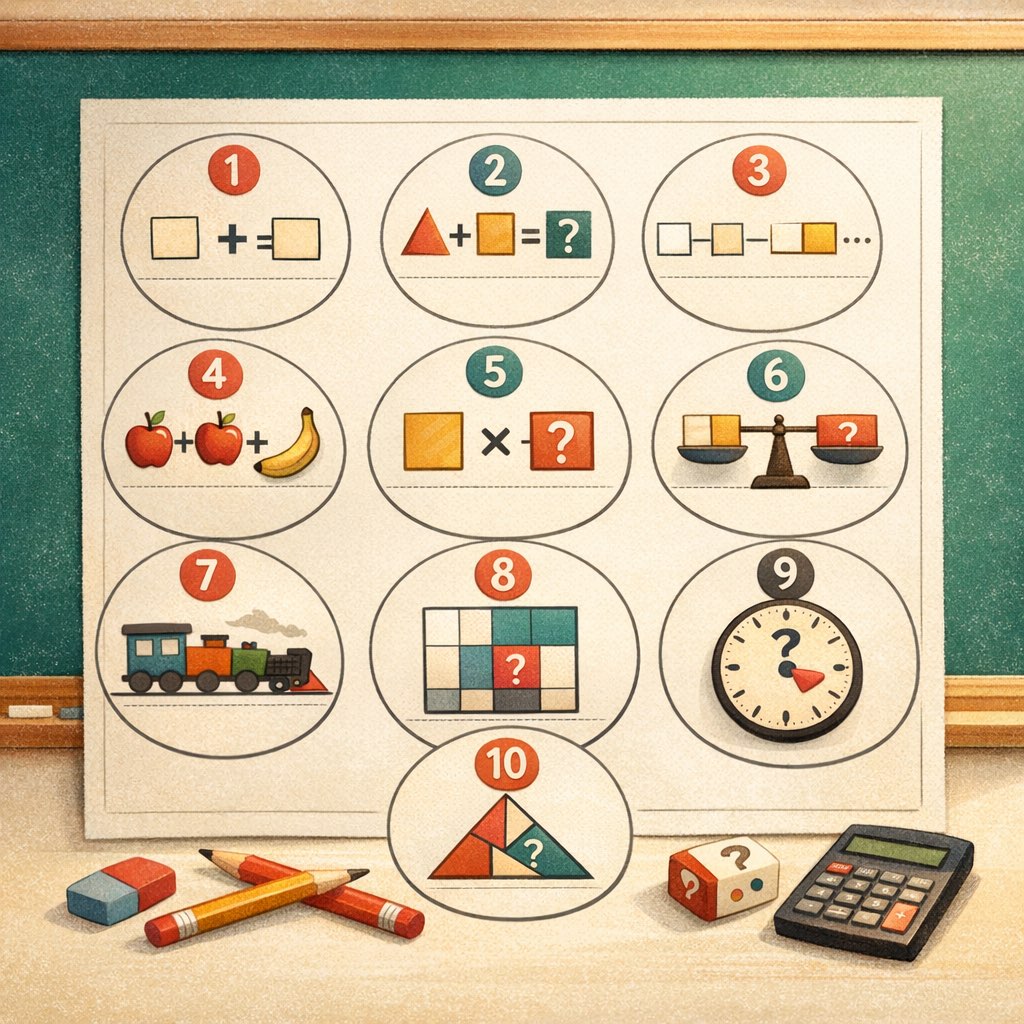
A small skill check can be very useful when you want to see whether basic ideas are truly settling in. A short set of well-chosen problems can reveal much more than a long page of random questions. The goal is not simply to collect scores. The goal is to notice which skills feel solid, which ones need more support, and how the student reacts when the work becomes a little less familiar.
Ten mixed problems are enough to highlight strengths, expose weak spots, and create a focused plan for the next round of practice. Used calmly, a small challenge set can build confidence as well as give useful feedback.
If you are helping a child at home, use the examples in this guide as calm talking points rather than a script to rush through. The goal is to make the next step clear, lower pressure, and give your child language they can reuse independently.
Ten mixed problems are enough to highlight strengths, expose weak spots, and create a focused plan for the next round of practice. It helps to work through the questions slowly and leave space for notes, diagrams, or estimates. Students often show their understanding more clearly when they are not being rushed.
If possible, ask the learner to explain one or two answers out loud after finishing. That explanation tells you far more than the final number alone. A correct answer with confused thinking still needs support, while a wrong answer with good reasoning often means the student is much closer than it first appears.
Encourage students to write or say one sentence about their thinking on at least three of the problems.
Do not only mark answers right or wrong. Look at the strategy, the organization of the work, and whether the student checked the result. Start by sorting mistakes into categories. Was the issue a fact error, a reading problem, a place value slip, a missed step, or a misunderstanding of the concept itself? That simple habit turns a practice set into a useful plan.
It also helps to ask three calm questions after the set is complete: Which problem felt easiest? Which one felt confusing? Which strategy helped the most? Students become stronger learners when they can notice patterns in their own work instead of waiting for someone else to explain everything afterward.
If several questions point to the same gap, do not jump straight to a bigger test. Return to one focused skill, reteach it with an example, and try a shorter set again later. Practice works best when it leads to the next right step.
A mixed problem set works best when it can be adjusted without losing its purpose. Some students may benefit from doing all ten questions in one sitting, while others will do better with two shorter rounds and a quick discussion in the middle. Splitting the set does not reduce its value. In many cases, it actually improves the quality of the thinking because the learner has enough energy to explain choices and check work carefully.
You can also adjust the support level. A student who is still building confidence may use a number line, counters, or a place-value chart for part of the set. Another student may be ready to work more independently but still need to explain the strategy aloud afterward. The point is not to keep every learner under identical conditions. The point is to gather useful information about what each student understands right now.
After the set is complete, look for the clearest next step. If the learner misses several place-value questions, that becomes tomorrow's focus. If the student handles the calculations but struggles with explaining reasoning, the next lesson can include more discussion and fewer new problems. That is how a short challenge set turns into a practical teaching tool.
When students see that a challenge set leads to helpful support rather than simple judgment, they are much more willing to engage honestly with the work.
A short mixed set like this is most useful when it leads directly into the next right practice task. For related support, read How to Check Your Math Answers, Common Mistakes in Math and How to Avoid Them, and How to Solve Math Problems Step by Step.
A beginner-friendly collection of worksheet ideas focused on steady practice rather than overload.
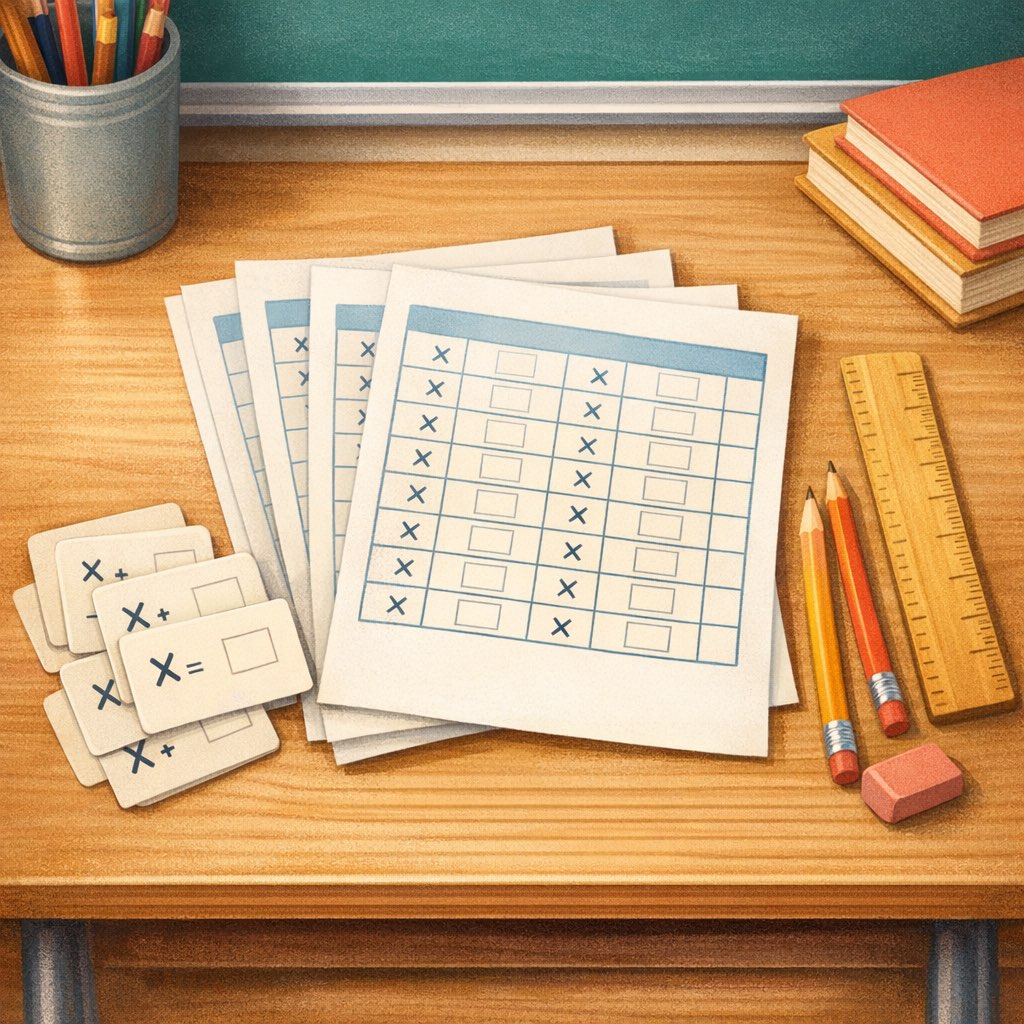
Use targeted practice sheets to revisit multiplication facts, patterns, and mixed recall.
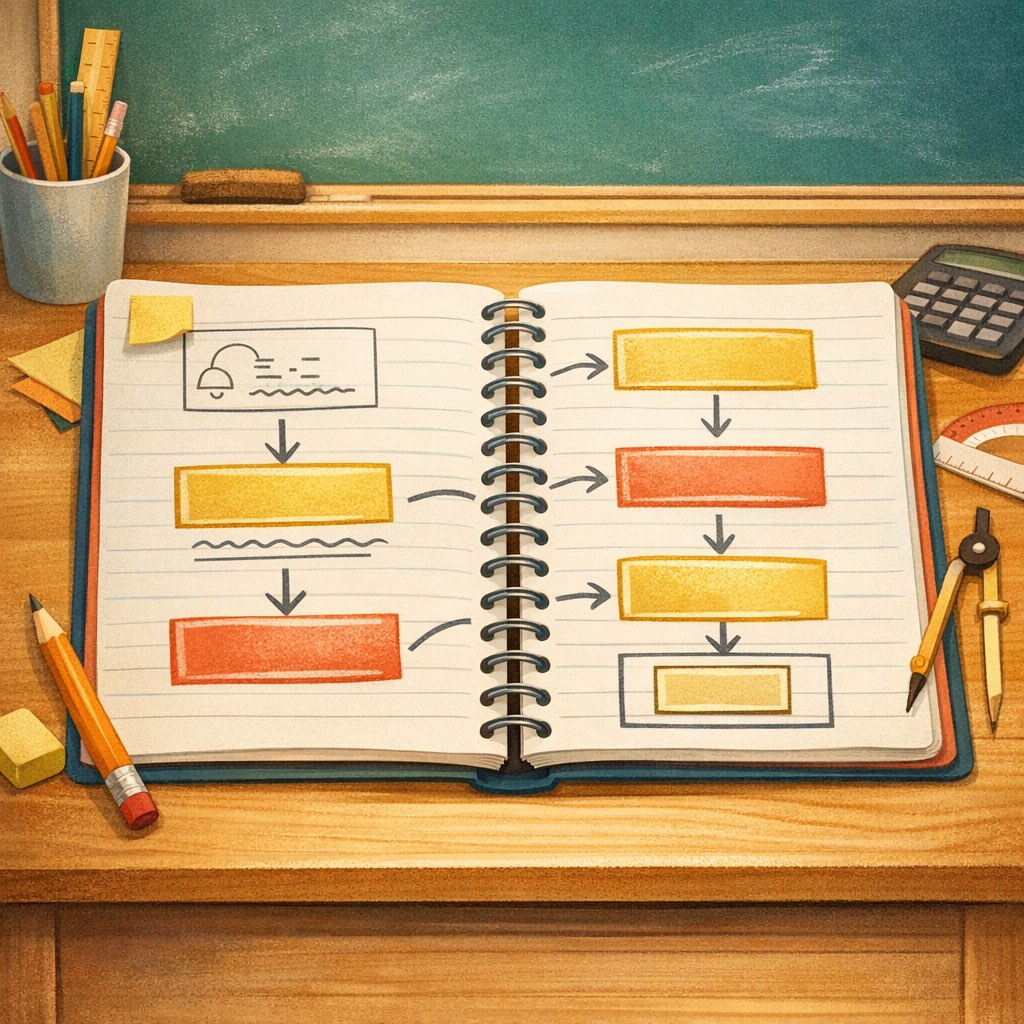
A calm problem-solving routine for reading carefully, planning a method, and checking your work properly.