How to Solve Math Problems Step by Step
A calm problem-solving routine for reading carefully, planning a method, and checking your work properly.
Problem Solving
Turn word problems into manageable steps by identifying relationships, quantities, and useful models.
Word problems often feel difficult not because the math is too advanced, but because students are trying to decode language and choose a method at the same time. In most cases, the issue is not a lack of effort. It is that the student needs a calmer process, clearer language, and a reliable way to tell whether the work makes sense.
A steady reading routine helps students separate the story from the calculation so the problem feels less crowded. When those pieces are in place, problem solving becomes much less intimidating.
If you are helping a child at home, use the examples in this guide as calm talking points rather than a script to rush through. The goal is to make the next step clear, lower pressure, and give your child language they can reuse independently.
A steady reading routine helps students separate the story from the calculation so the problem feels less crowded. Students often believe strong math learners solve everything quickly in their heads, but that is not what good math looks like. Strong learners usually slow down, sort the information, choose a method, and check whether the answer fits the question.
That is encouraging news for beginners because it means improvement is not only about talent. It is also about habits. A student who learns how to read carefully, organize the work, and reflect on the result can make major progress even before every topic feels easy.
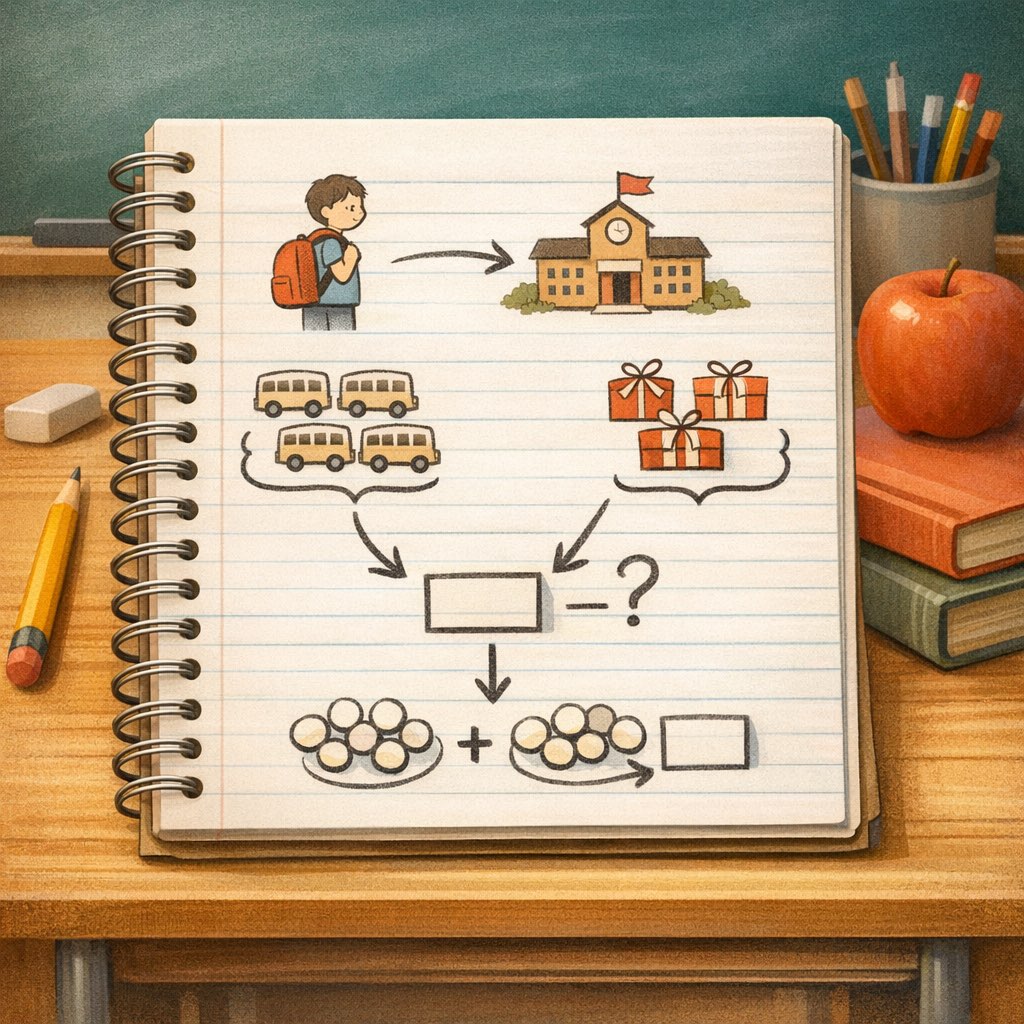
If a problem says that Maya has 12 stickers, gives 5 away, and then buys 3 more, the first task is to describe the story in plain language before touching the numbers. The most useful move is often to translate the question into plain language before touching the numbers.
Ask a short question such as, "What am I trying to find?" or "What is happening in this situation?" That step prevents students from jumping into the first operation they recognize. It also keeps them from treating every problem as a speed test.
Once the student says, "The amount goes down and then up again," the operations become easier to choose. Once the goal is clear, the calculation usually becomes more manageable because the work has a purpose.
Ask the learner to tell the story back in one simple sentence before solving.
Students often hunt for clue words only, but clue words are not always reliable and can lead to the wrong operation. Students may notice one number or one familiar word and decide on a method too early. That is why rereading the question and marking key information can be so helpful.
A second problem appears when students treat the first answer as the final answer. Even a quick estimate, inverse operation, or unit check can reveal a mistake before the work is turned in. Checking is not extra work. It is part of solving the problem well.
Many learners also become stuck because one wrong answer quickly turns into a feeling of, "I am bad at math." Adults can soften that pressure by responding to mistakes with curiosity. Instead of saying, "That is wrong," it often helps to say, "Show me where your thinking started to change." That tone keeps the student engaged.
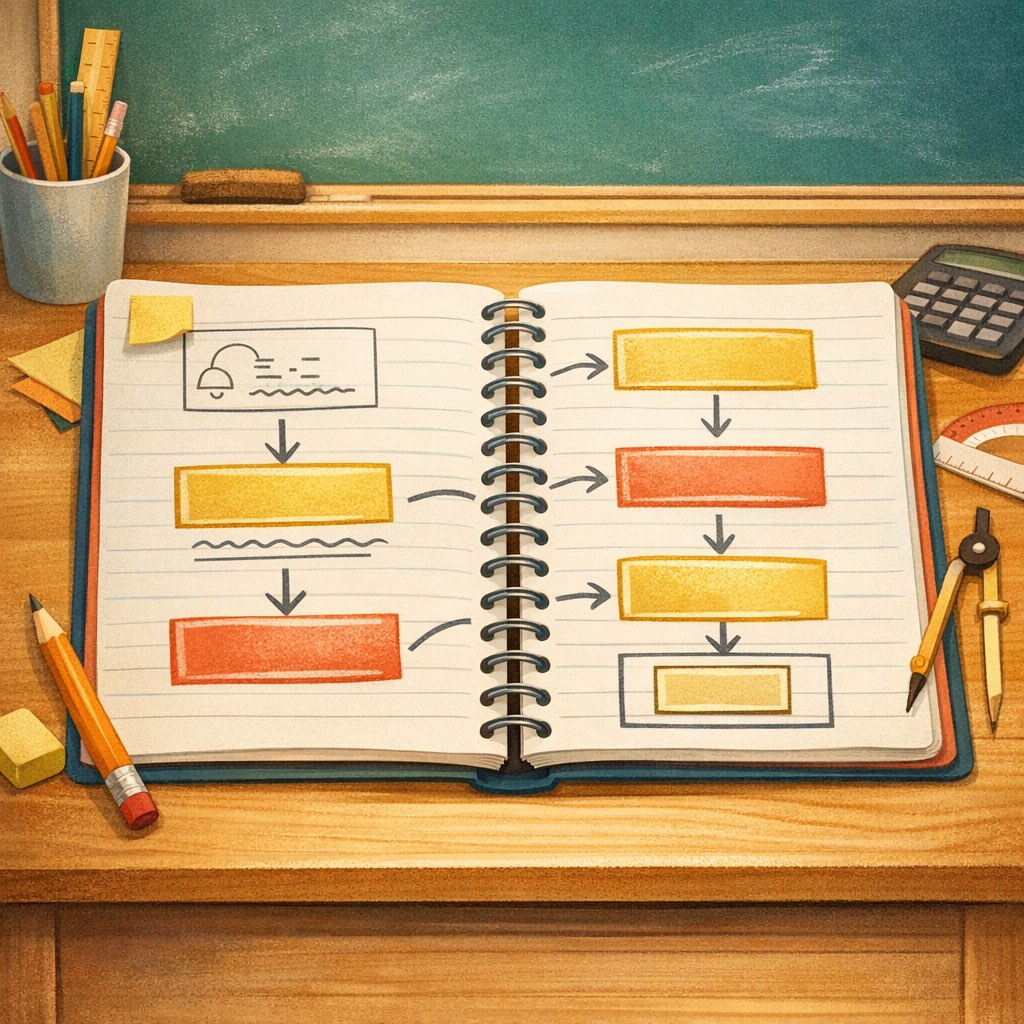
A four-step routine of read, retell, plan, and check works especially well for word problems. The routine does not need to be long. It only needs to be repeatable.
Students who use the same routine over and over begin to trust themselves more. They stop relying on guesswork and start relying on structure. That shift is one of the most effective ways to lower stress and build lasting confidence.
Students rarely build strong problem-solving habits in one lesson. They improve when the same calm routine appears again and again. That is why it helps to name the routine out loud and keep the wording consistent. A student who hears "Read, plan, solve, check" or "Retell, choose, work, review" on many different days begins to internalize the process instead of depending on a teacher or parent to restart it each time.
It also helps to praise the process specifically. Instead of saying only "Good job," say something like, "You reread the question before choosing an operation," or "You noticed that the answer did not match the unit and fixed it." Specific feedback trains attention. It tells students which habits are worth repeating and shows them that progress is not limited to getting everything right on the first try.
Many learners use a routine only when the work becomes hard, but that makes the habit harder to remember under pressure. It is better to practice the same steps on easier questions as well. When the structure feels familiar, students are much more likely to use it naturally on tests, homework, and unfamiliar tasks.
Those small habits reduce stress because the student no longer has to invent a plan from nothing. The routine becomes a dependable starting point, and that dependability is often what allows confidence to grow.
When students learn to translate the story calmly, word problems stop feeling like a guessing game. For related help, read How to Solve Math Problems Step by Step, Common Mistakes in Math and How to Avoid Them, and How to Check Your Math Answers.
A calm problem-solving routine for reading carefully, planning a method, and checking your work properly.

Notice the error patterns students repeat most often and learn simple habits that prevent them.
A calm problem-solving routine for reading carefully, planning a method, and checking your work properly.