How to Learn Multiplication Tables Fast
Use patterns, small review cycles, and smart practice routines to remember multiplication facts with less stress.
Mental Math
Improve speed and number sense with flexible mental strategies that work in school and everyday life.
Mental math is not about showing off or racing other people. At its best, it is a practical skill that helps students feel more fluent with numbers. It makes everyday calculations easier, supports estimation, and gives students more control when they work through larger problems on paper. Good mental math also builds confidence because students begin to trust their own number sense.
The most useful mental math tricks are not mysterious shortcuts. They are patterns that make numbers easier to handle. Once students understand those patterns, they can adapt them in many different situations.
If you are helping a child at home, use the examples in this guide as calm talking points rather than a script to rush through. The goal is to make the next step clear, lower pressure, and give your child language they can reuse independently.
The strongest mental calculators are not always the quickest at first. They are the students who understand what the digits mean. Place value is the foundation of nearly every mental strategy. If a student sees 48 as 40 and 8, or 125 as 100 and 25, then the number becomes flexible. That flexibility is what allows efficient calculation.
For example, adding 48 + 27 mentally becomes easier when it is seen as 40 + 20 and 8 + 7. The student can think, “That is 60 plus 15, so 75.” This is cleaner than trying to hold the whole calculation in memory all at once.
Mental math works best when numbers are treated as parts that can move, combine, and balance.
One of the most useful mental math habits is decomposition, which means splitting numbers into friendlier parts. Students can use this for addition, subtraction, and multiplication.
Suppose you want to calculate 67 + 28. A clear mental route is 67 + 20 = 87, then 87 + 8 = 95. For subtraction, 83 - 29 can be treated as 83 - 30 = 53, then add 1 back to get 54. This is called compensation, and it is especially helpful when one number is close to a friendly multiple of ten.
Compensation is one of the easiest tricks to remember because it is so useful. If a student needs 198 + 35, it is faster to think 200 + 35 = 235 and then subtract 2 to get 233. If the problem is 502 - 198, a student can think 502 - 200 = 302 and then add back 2 to get 304.
These adjustments are small, so the calculation becomes easier to track mentally.
Mental multiplication is much easier when students stop trying to hold the whole problem in one step. Instead, they can use relationships between facts.
If one number can be halved easily and the other doubled, the product stays the same. For example, 25 x 16 can become 50 x 8, then 100 x 4, which is 400. This works because the groups change shape, but the total amount does not change.
Facts close to 10, 20, 50, or 100 are often easier to manage. To calculate 19 x 6, think 20 x 6 = 120 and subtract 6 to get 114. To find 49 x 3, think 50 x 3 = 150 and subtract 3 to get 147.
Students can also use already-known multiplication facts to support harder ones. If 7 x 8 feels slow, try 7 x 4 = 28 and double it to get 56. That kind of flexible thinking is more durable than trying to memorise every fact as a separate item.
Ask students to explain which route they chose. Mental math gets stronger when the strategy is spoken aloud, not just used silently.
Mental math also depends on estimation. Estimation helps students judge whether an answer is sensible before they finish computing. If someone says that 198 divided by 6 is 58, estimation should raise a flag right away because 200 divided by 6 is a little over 33.
For mental division, students should look for friendly facts and nearby benchmarks. To calculate 84 ÷ 4, they can use the known fact that 8 tens divided by 4 is 2 tens and 4 ones divided by 4 is 1, so the answer is 21. For 96 ÷ 3, many students know 9 tens divided by 3 is 3 tens and 6 divided by 3 is 2, giving 32.
Even when an exact answer is not immediate, a good estimate is still powerful. It keeps students grounded and protects them from careless mistakes.
Mental math improves with short regular practice. A daily routine can be very simple:
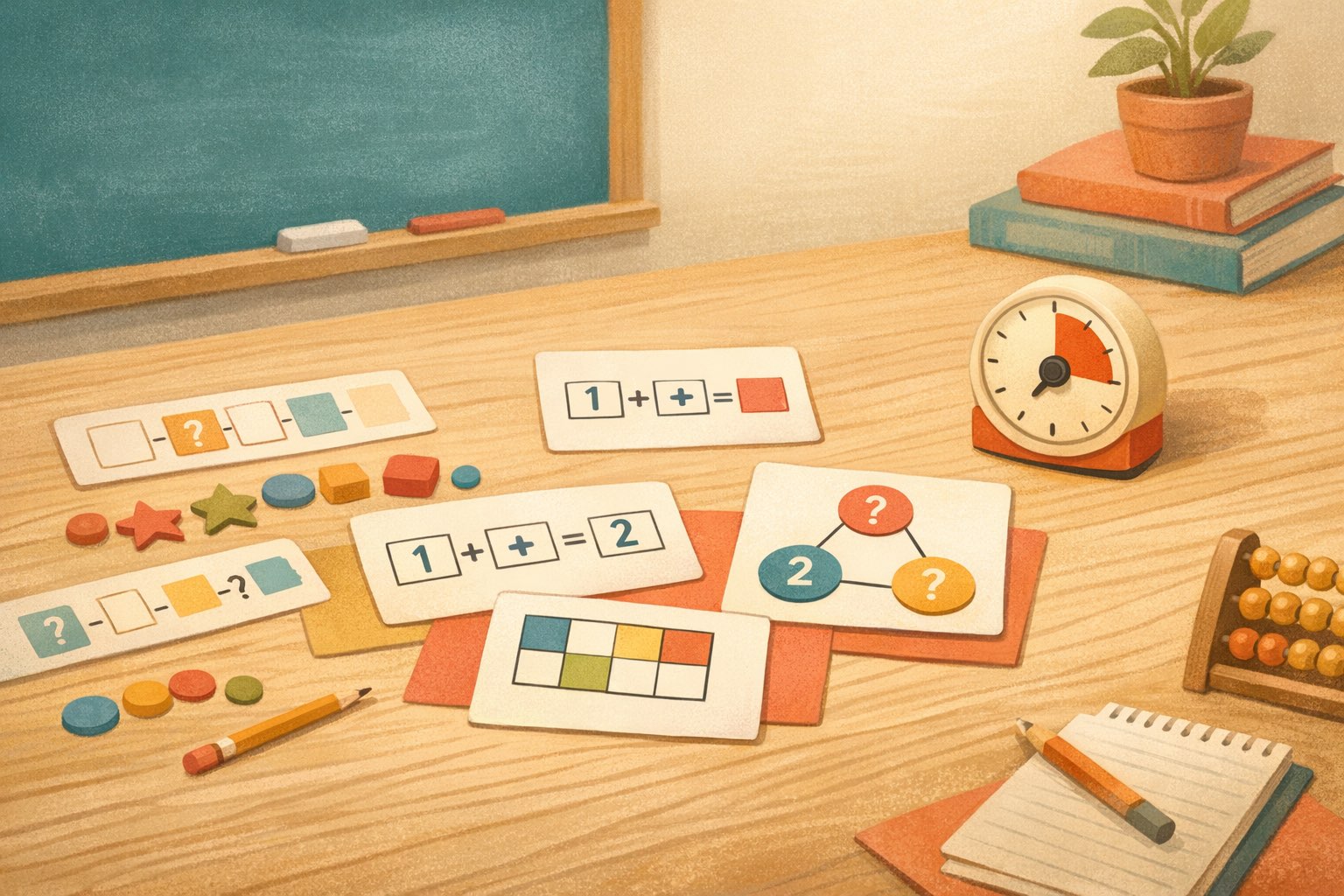
Some students respond especially well when that practice feels playful rather than repetitive. Working with interactive math puzzles can help train pattern recognition, flexible thinking, and attention without making the session feel heavy, which is useful when a learner needs regular number practice in a lower-pressure format.
This whole routine can take five minutes. The key is consistency. Students do not need huge sessions. They need repeated, thoughtful contact with number patterns.
Mental math should feel like sense-making, not pressure. If a strategy does not feel natural yet, students can write it down first, then gradually move more of the thinking into their heads.
The best mental math tricks come from understanding numbers, not from memorising flashy shortcuts. Place value, compensation, doubling and halving, and good estimation are useful because they help students see structure. That structure reduces stress and increases accuracy.
If you want to connect mental calculation to stronger written work, read How to Solve Math Problems Step by Step. If multiplication facts still feel shaky, How to Learn Multiplication Tables Fast is a good place to continue.
Use patterns, small review cycles, and smart practice routines to remember multiplication facts with less stress.
Use place value, rounding, and estimation to make quick calculations feel more manageable.
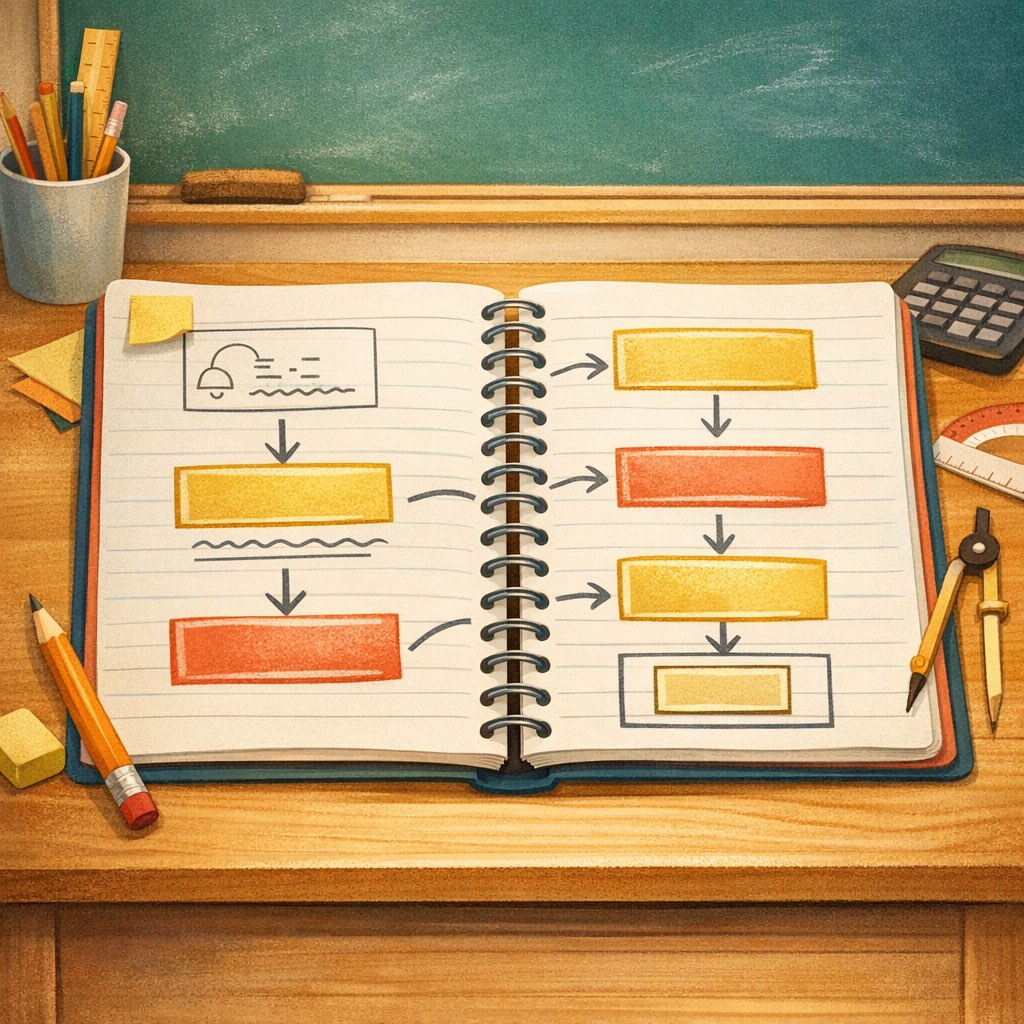
A calm problem-solving routine for reading carefully, planning a method, and checking your work properly.