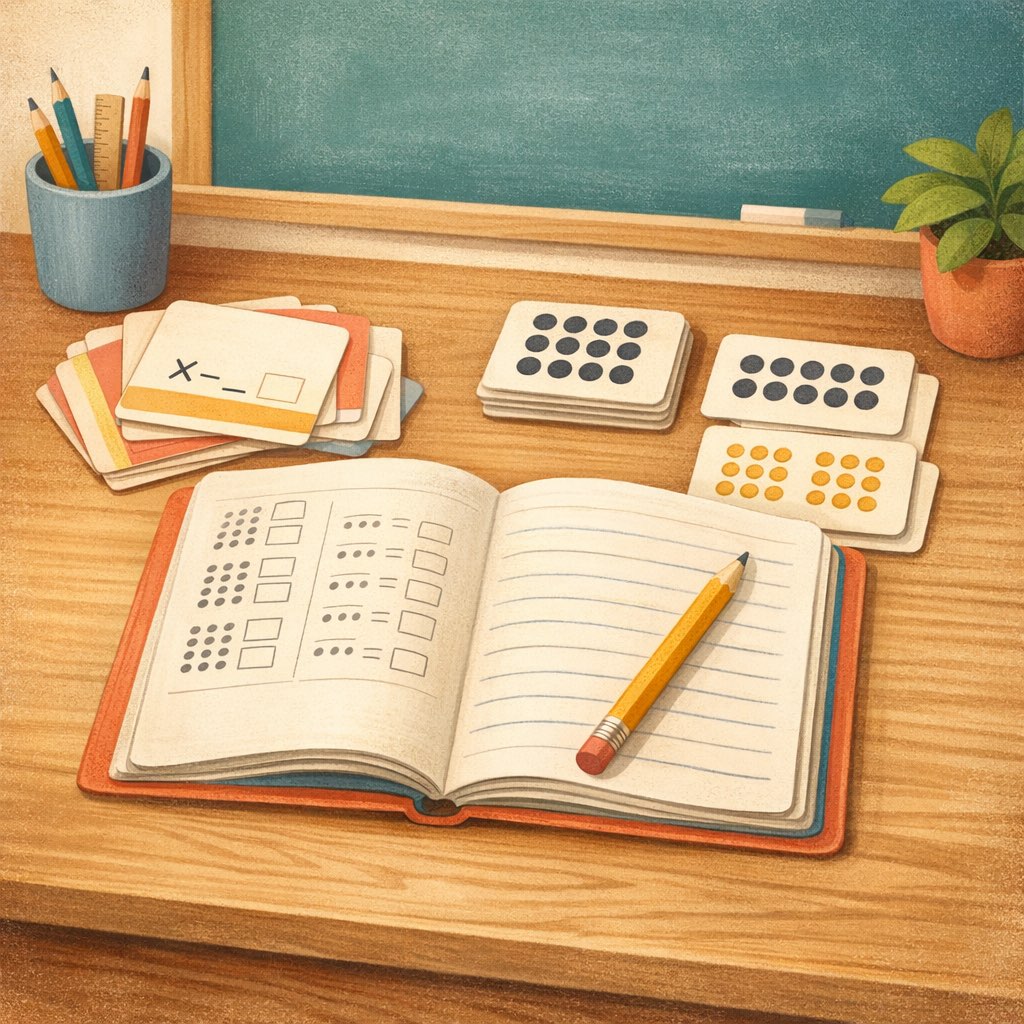
How to Learn Multiplication Tables Fast
Use patterns, small review cycles, and smart practice routines to remember multiplication facts with less stress.
Basic Math
Understand addition as putting groups together, spotting patterns, and building early number confidence.
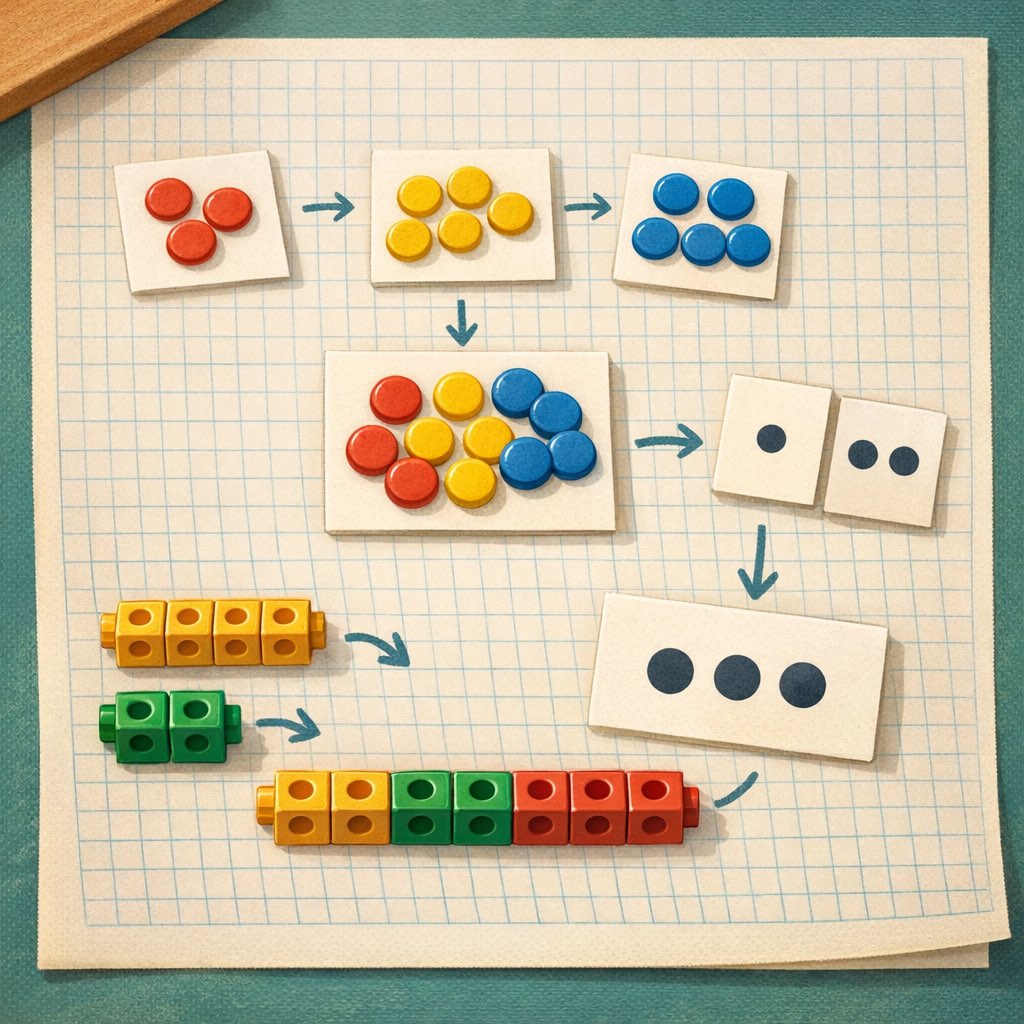
Addition is often the first formal math idea children meet, but it becomes much easier when it starts with a simple picture instead of a page of symbols. At its heart, addition shows what happens when two or more amounts are put together to make a new total. Students usually relax once they see that the symbols are describing a familiar action rather than introducing a mysterious new rule.
For example, three counters on one side of the table and two on the other can be pushed together so the child can see five altogether before writing 3 + 2 = 5. That shift from concrete to written math is what makes the idea stick.
If you are helping a child at home, use the examples in this guide as calm talking points rather than a script to rush through. The goal is to make the next step clear, lower pressure, and give your child language they can reuse independently.
At its heart, addition shows what happens when two or more amounts are put together to make a new total. A useful teacher question is, "What is happening to the amount?" When students answer that first, the calculation becomes much easier to understand and remember.
For example, three counters on one side of the table and two on the other can be pushed together so the child can see five altogether before writing 3 + 2 = 5. That is why counters, drawings, number lines, money, measuring cups, or quick sketches are so helpful. They give the learner something solid to talk about before the notation takes over.
Once the picture is clear, the number sentence stops feeling random. It becomes a quick summary of what the student already knows. This matters because many early struggles in math are not really about intelligence. They come from being asked to work with symbols that never got connected to meaning in the first place.
Imagine a student has 4 blue cubes and then adds 3 red cubes. You can line them up, count them all, and notice that the collection is now 7 cubes. The goal is not only to get the right answer but to explain why the answer makes sense.
When you work through a simple example, say each step aloud in plain language. Let the learner point to the objects, the drawing, or the number line as the work is happening. That habit builds clarity. It also makes it easier to catch mistakes early because the spoken explanation and the written work should match.
Later, the student can notice patterns such as 4 + 3 and 3 + 4 giving the same total, which builds flexibility as well as accuracy. That extra moment of explanation is often what turns a memorized move into a real understanding.
Before writing the answer, ask the learner to say, "I am putting two groups together to find the total."
Some beginners memorize the plus sign without noticing that the amount is growing or combining. When that happens, students may copy a method without knowing what it represents. The work might look neat on the page, but confidence disappears as soon as the numbers change.
Another common issue is finishing the calculation and moving on without asking whether the answer is reasonable. A strong habit is to pause and make a quick estimate or compare the result to the picture. If the answer feels far too big, too small, or the wrong sign, that pause often catches the error.
Students also benefit when adults use consistent everyday language. Short phrases such as "put together," "share equally," "parts of one whole," or "move left on the number line" help learners connect vocabulary to action. That connection is especially important for beginners and for students who become anxious when math sounds overly formal.
Short sets of five questions mixed with pictures, objects, and number sentences are usually enough for a beginner. The best routine is usually short enough that the learner can finish it without frustration and frequent enough that the idea stays fresh.
Five focused minutes often helps more than a long session filled with rushing. If the learner can say what the numbers mean, explain one example in words, and complete a few questions accurately, that is real progress. Skill grows faster when students leave practice thinking, "I understood that," not "I survived that."
One reason a new math idea becomes clearer over time is that students begin to meet it in more than one form. They might see it in a drawing, hear it in ordinary language, use it with classroom objects, and only after that record it with symbols. That repeated connection matters because understanding grows through recognition. Students start to think, "I have seen this before," even when the numbers are different.
Adults can make that process much stronger by asking for small explanations instead of only final answers. A student who says, "I shared the counters equally," "I compared the sizes of the pieces," or "I looked at the place value first" is doing more than repeating a rule. The learner is building a memory for when and why the method works. That kind of memory lasts longer than a worksheet score from one afternoon.
After one or two examples, pause and ask a few calm questions. What is happening to the amount? How do you know the answer makes sense? Can you show the same idea another way? These questions are especially helpful when a student tends to rush, because they slow the work down just enough for real thinking to happen.
That routine does not take long, but it teaches something powerful: math is not only about getting through a page. It is about noticing meaning, building patterns, and trusting that understanding can grow with practice.
Once addition feels clear, it becomes much easier to understand subtraction as taking away or finding a missing part. For a helpful next step, read How to Learn Multiplication Tables Fast, Division Explained Step by Step, and How to Solve Math Problems Step by Step.
Use patterns, small review cycles, and smart practice routines to remember multiplication facts with less stress.

Break division into equal groups, repeated subtraction, and long division steps that actually make sense.
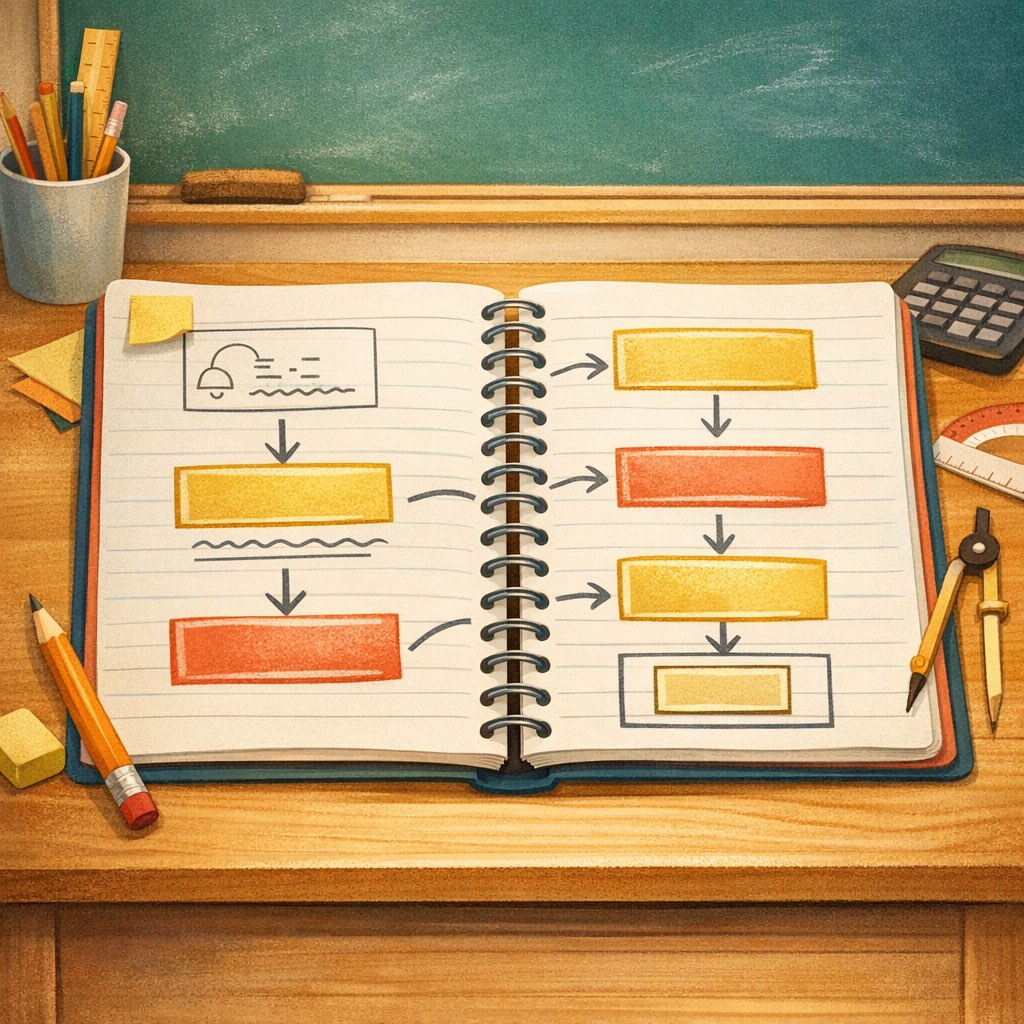
A calm problem-solving routine for reading carefully, planning a method, and checking your work properly.